For most new installations in homes, yes. Since the 18th Edition of the wiring regulations, a surge protection device (SPD) is expected on new consumer units, and it can only be left out in limited cases. It protects electronics from short voltage spikes caused by lightning nearby or switching on the network. Every board we fit includes one as standard, at no extra cost.
What a surge is
A transient overvoltage, or surge, is a spike lasting a tiny fraction of a second. Lightning striking near overhead lines causes the big ones. Smaller ones come from large equipment switching on and off on the network. Your lights will not flicker, but the electronics in a modern home take the hit, a little at a time or all at once.
What an SPD does
An SPD sits on the board and diverts the spike to earth before it reaches your circuits. The type fitted in homes is a Type 2 device. Most have a small window that shows green when working and red when the device needs replacing.
It protects the things that are expensive and annoying to lose: boiler and heating controls, the router, TVs, fridge freezers with electronic controls, LED drivers, alarms and EV chargers.
 After
After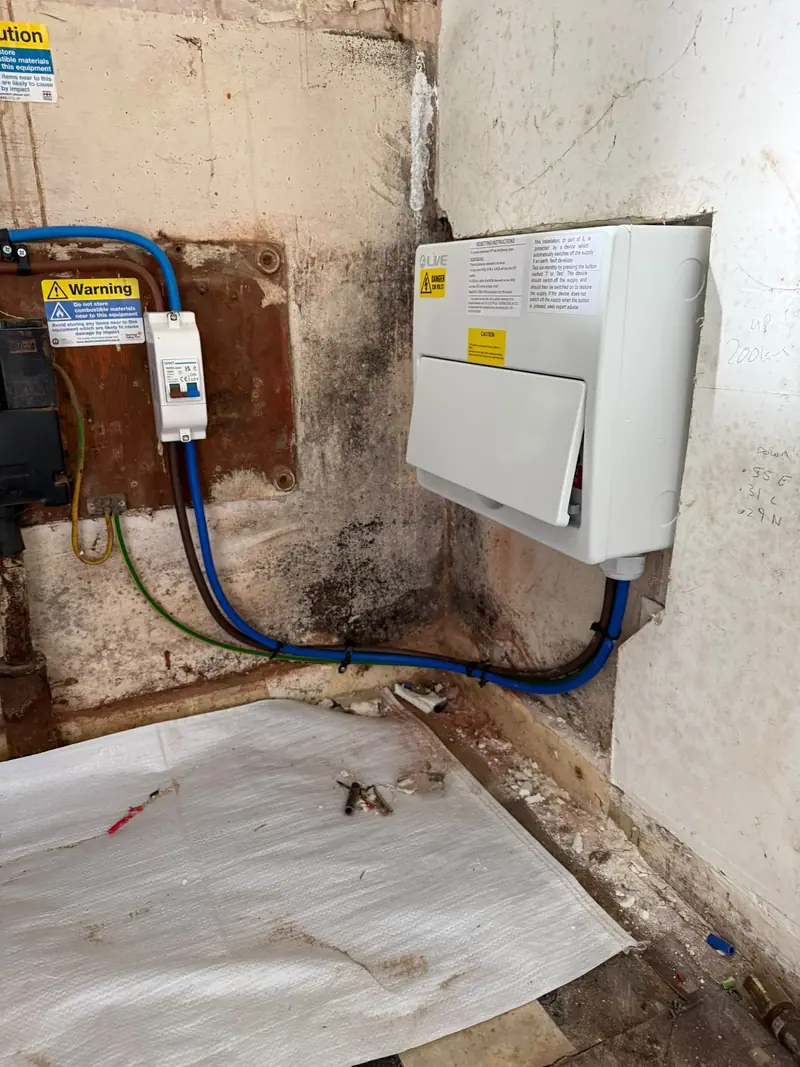 After
AfterWhat the regulations say
BS 7671, the wiring regulations, requires protection against transient overvoltages in new installations where the consequences would be serious, and expects it in most other cases too. For a house, leaving it out is a narrow exception that has to be recorded. In practice every new domestic consumer unit should have one.
Older boards are not required to be retrofitted. An inspector may recommend one on an EICR, usually as a C3, which does not fail the report.
What it will not do
- It is not a lightning conductor and will not save a house from a direct strike.
- It does not stop an RCD tripping. That is a different device doing a different job.
- Plug-in surge strips still help for a desk full of kit. They work alongside the SPD, not instead of it.