No. Since 1 January 2016, new consumer units in homes must have a non-combustible enclosure, which in practice means metal. The rule is not retrospective, so a plastic board fitted before then is not illegal and does not automatically fail an EICR. Some inspectors note it as a C3, improvement recommended, which does not make the report unsatisfactory.
What the rule says
Amendment 3 to BS 7671:2008, the wiring regulations, added a requirement that consumer units in domestic premises are housed in an enclosure made of non-combustible material, or inside a cabinet made of one. It applied to work from 1 January 2016 and carried into the 18th Edition. Manufacturers responded by making steel boards, and that is what every electrician fits in a home today.
BS 7671 applies to new work. It does not require existing installations to be brought up to the latest edition, so a plastic board fitted in 2014 was compliant when it went in and is not unlawful now.
Why it changed
Fire services had seen a pattern of fires starting at consumer units, many of them under stairs, on the only escape route out of the house. The usual cause was a loose connection that overheated. A plastic enclosure let that fire spread. A steel one contains it. The rule is about what happens when something goes wrong, not about plastic boards being faulty in themselves.
Does a plastic board fail an EICR?
Not on its own. An inspector codes what they find. A plastic board in good condition with RCD protection is usually either not coded or given a C3, which is a recommendation. C3 items do not make a report unsatisfactory, and landlords do not have to act on them within 28 days.
A plastic board will be coded more seriously if it shows heat damage, has missing blanks or broken parts, or if the circuits lack protection the inspector considers necessary. Those are faults in their own right. EICR codes explained covers what each code means.
 After
After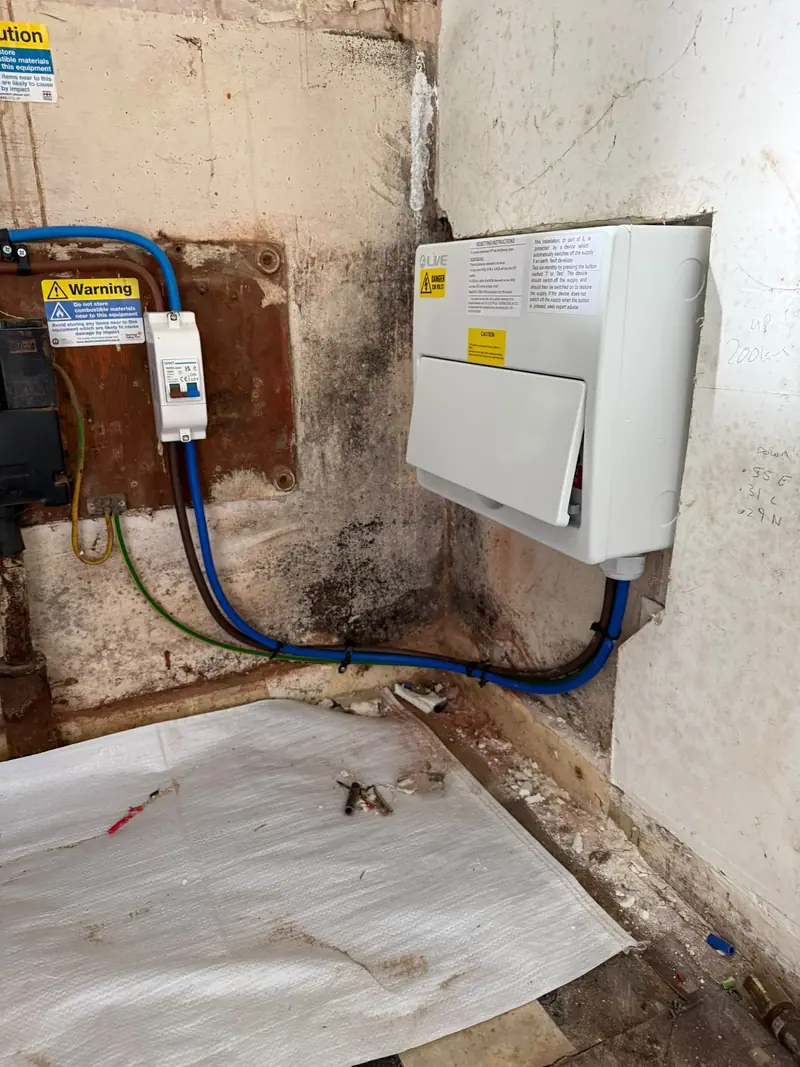 After
AfterWhen it is worth replacing a plastic board anyway
- It has no RCD protection, or one RCD for half the house and you are fed up with it tripping.
- There are signs of heat: discolouration, a smell, or a device that feels warm.
- You are adding an EV charger, electric shower or extension and there is no spare way.
- It sits under the stairs in a house with one way out, and you want the extra margin.
- An EICR has coded it C1 or C2.
If none of those apply, we will tell you to keep it. If they do, a metal RCBO board with surge protection starts at £449 fixed and goes in the same spot on the wall.