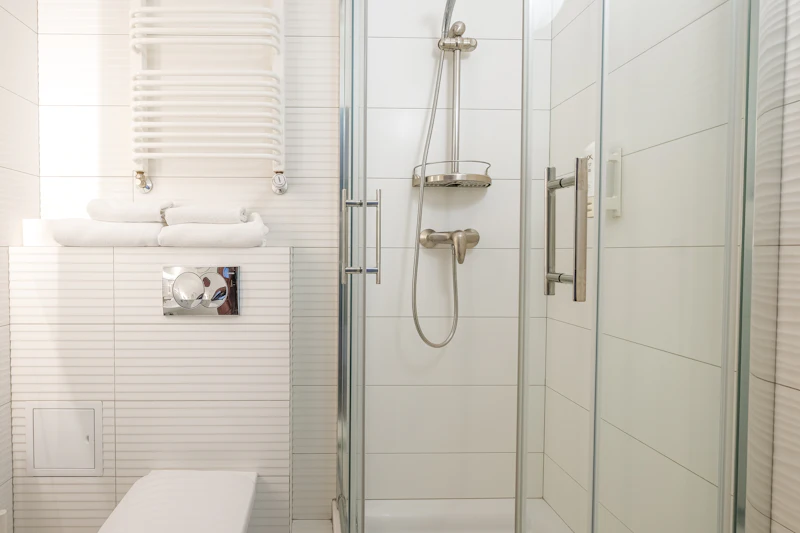
Usually, if the board has a spare way, suitable RCD protection, and your supply has the capacity. A 7kW EV charger draws about 32A and a 9.5kW electric shower about 41A. Old boards with no spare way or no RCD protection, or homes on a 60A main fuse, often need an upgrade first. We check all of this from three photos and fit EV-ready boards from £449.
The numbers
| Appliance | Power | Current, roughly |
|---|---|---|
| Home EV charger | 7.4kW | 32A |
| Electric shower | 8.5kW | 37A |
| Electric shower | 9.5kW | 41A |
| Electric shower | 10.5kW | 46A |
Most homes in Greater Manchester have a 60A, 80A or 100A main fuse. A shower and a charger running at the same time as an oven and a kettle can add up quickly, which is why the main fuse matters.
The four things that decide it
- A spare way. Each of these needs its own circuit and its own protective device. A full board means a second board or a new one.
- The right protection. An RCBO for the circuit, of a type suitable for the appliance. EV chargers also need protection against DC leakage, which many chargers build in. See RCD or RCBO.
- The main fuse and meter tails. The rating is printed on the cut-out fuse carrier. Do not open it, just photograph it. If it needs upgrading, the network operator, Electricity North West, does that.
- Earthing. EV chargers have specific earthing requirements, and older earthing sometimes needs an upgrade, £80 to £160.
Who does what
We get the board ready: a metal RCBO board with spare 32A and 40A ways, surge protection, and earthing and tails sorted if needed, fitted in one visit and certified. The shower fitter or charger installer then runs their circuit to a ready, labelled way. Many installers will not connect to an old board, so doing the board first saves a second visit.
See board upgrades for EV chargers and showers for prices.